




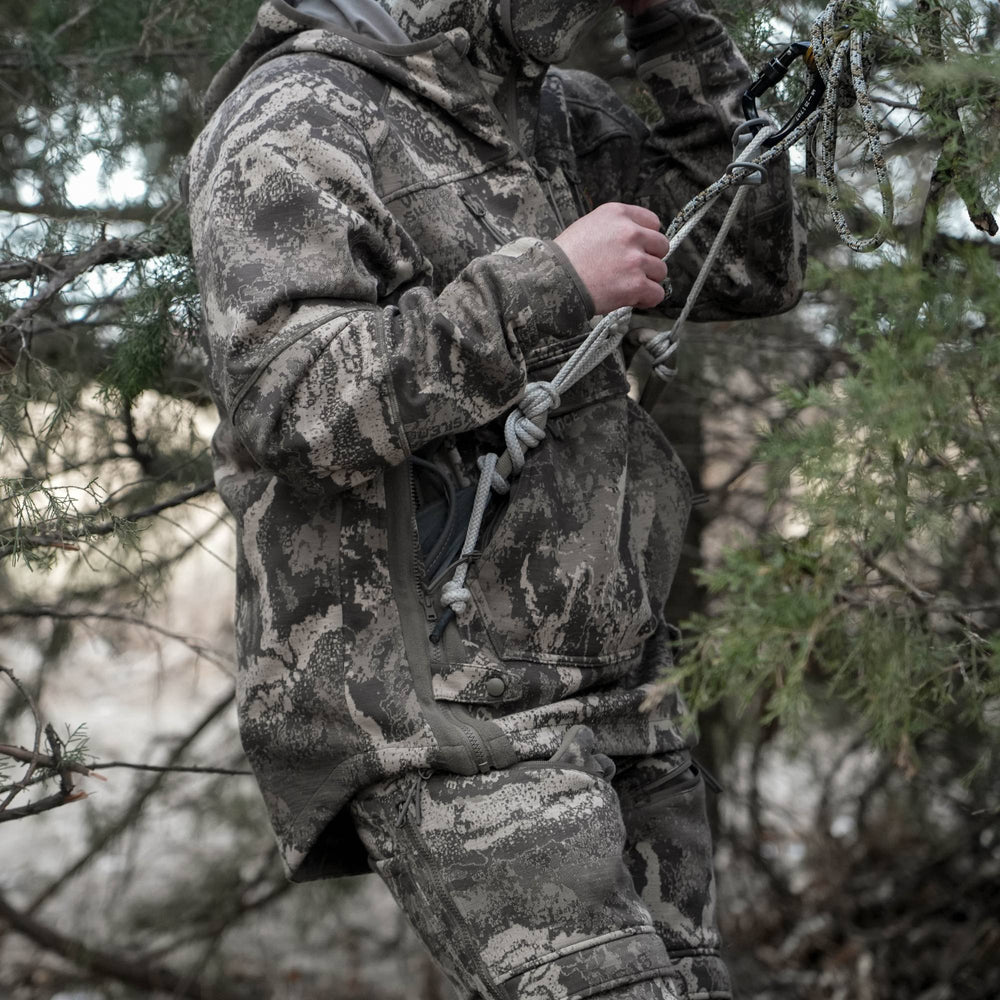
The Annual Gear Audit: What Stays, What Goes, and Why Code of Silence Endures

There’s a ritual I follow every winter, usually after the last backstrap has been wrapped and labeled in the freezer. It happens in a quiet garage or sometimes by the light of a woodstove. I pull out every piece of gear I used that season—from boots to bino harnesses—and put it through a process that’s part inspection, part reflection.
It’s what I call the annual gear audit.
Because every season in the field is a conversation. With the land. With the animals. And with your equipment. And like any honest dialogue, you find out what pulled its weight—and what didn’t.
Why We Audit
We don’t audit gear out of obsession. We do it out of respect. For the animals we pursue. For the time we’ve invested. And for the pursuit itself. Gear that fails us isn’t just an inconvenience—it’s a liability. And when something works flawlessly, it deserves recognition.
I’ve worn synthetic outer layers that snapped and popped when frost settled in the brush. I’ve hoisted packs that creaked like dry timbers when shifting on stand. Those pieces didn’t make the cut.
But there’s one system that keeps showing up in my pack, on my back, and in my photos: Code of Silence.

The Sorting Process
A good audit starts with three piles:
-
Keep: Proven, trusted, field-tested.
-
Fix or Replace: Gear that could work, but needs repair or upgrade.
-
Retire: Things that underperformed, made noise, or cost you an opportunity.
Be honest with yourself. If you hesitated to wear it on a cold, still morning, it belongs in the latter pile.
What Stays: Code of Silence
Code of Silence doesn’t stay in my kit out of habit. It stays because it works—plain and simple. Wool construction, sensory gating, natural fibers that manage moisture and deaden sound. These aren’t just features, they’re functions. Ones that matter when the stakes are high.
It’s easy to chase trends in camo patterns and tech fabrics. But in my experience, the best gear doesn’t draw attention to itself. It just works. It helps you move quietly, stay warm without bulk, and disappear when the morning thermals rise.
Stands, Saddles, and Blinds
These are the platforms where opportunity meets patience. A creaky climber or noisy platform has cost me more than one deer. Every year, I check welds, bolts, straps, and all points of contact. If I’m running a saddle system, I audit the bridge and lineman’s belt for wear. As for blinds, zipper noise and fabric flapping in a breeze are non-starters.
This is also where Code of Silence gear shines. Quiet gear makes a noisy setup more forgiving. When your pants don’t swish and your jacket doesn’t crinkle, you reduce the sum total of your signature.

Archery Gear
Archery is unforgiving. Strings stretch, limbs flex, and rest screws loosen. Your gear audit should include every component of your bow—strings, D-loop, sight housing, rest timing, and release function. I run my setup like a checklist pilot before takeoff.
Arrows get a full inspection: fletchings, nocks, and broadheads. If a broadhead drew blood, it gets cleaned and checked for flight. If it didn’t, I ask why. Sometimes it’s not the broadhead—it’s the shooter. But sometimes, it’s just a gear failure.
Firearms
Whether it’s a slug gun or a bolt-action .308, your rifle deserves the same scrutiny. Clean the bore. Check your scope mounts. Test your trigger. Make sure your sling won’t squeak or twist at the wrong moment. A well-maintained firearm is a confidence booster when it’s time to close the deal.
Code of Silence gear complements firearm hunting with quiet access. When you shoulder a rifle in wool, the fabric doesn’t betray you. That matters when every movement is magnified.

Optics, Boots, Socks, and Essentials
Good optics make average hunts better and great hunts possible. Check lens clarity, diopter settings, and harness function. If your binoculars fogged when you needed them most, it might be time for an upgrade.
Boots and socks often get overlooked until it’s too late. Inspect for sole wear, leaks, and failed insulation. Merino socks that held up get washed and stored. Pairs that caused blisters get tossed.
Other essentials—headlamps, knives, game bags, thermacells, and rangefinders—deserve a once-over. Anything that failed, jammed, or drained batteries early goes into the replace column.

The Pieces That Fail
Every year, there’s something that doesn’t make the cut. Maybe it was a jacket that looked good on the catalog page but couldn’t breathe during a hard climb. Or a pair of gloves that stayed in my pack because the fingers were too stiff to nock an arrow in silence.
These aren’t criticisms—they’re part of the process. The field is the proving ground, and not everything survives contact with cold mornings, wet leaves, or wary bucks.
Lessons From the Land
If hunting has taught me anything, it’s that the small things matter. The soft noise of a zipper. The way a collar folds when you draw. The ability to slip through cover without breaking rhythm. Code of Silence was built for those moments. The ones where detail determines success.
The gear I keep isn’t flashy. It’s earned. It has blood on it. Burrs in it. Sometimes even a tear or two that tells a story worth retelling.
Final Thoughts
As you go through your own gear audit, be honest. Be brutal, even. Your time in the field deserves better than half-measures and untested promises.
If something didn’t perform, let it go. If something made you better—kept you quieter, warmer, more invisible—keep it close. For me, that’s Code of Silence. Year after year, it just works.