




The Sound of Success: Why Silence Matters in the Whitetail Woods

There’s a moment that every serious whitetail hunter has felt. You’re 22 feet up in a maple, bow in hand, eyes scanning a thicket that looks like nothing—but your gut says it’s everything. Then it happens. Not a crunch, but a pause in the wind. A shift. And just like that, he’s there.
If you’ve put in the hours—hung stands in July, glassed beans in August, trimmed lanes in September—then you know how little margin there is when a mature buck finally steps in. And you also know how fast it can unravel with one wrong move.
Mature Bucks Know the Sound of Trouble
Forget what the hunting shows tell you. Mature bucks aren’t bulletproof, but they are efficient. They don’t give second chances. And more often than not, it’s not your scent or your movement that burns you. It’s the sound.
Synthetic jackets that crackle in the cold. Backpack buckles that click when you shift your weight. Zippers that sing just enough to send a three-year-old into DEFCON 1.
You might think you’re being careful. But to a buck who’s made it through three Michigan rifle seasons, the smallest unnatural sound is a red flag waving in a hurricane. Hunters don’t give sound the respect it deserves—until they get burned.
Tip: Run a Sound Audit
Sit in your stand one day and intentionally move. Twist. Reach. Shift your feet. Listen to what your gear is telling the deer. If you hear it, they definitely do. Make a habit of this when testing new setups.

Where Traditional Gear Fails: Cold Weather and Noise
When the mercury drops, most gear gets louder. Moisture freezes. Fabrics stiffen. And every little move—checking a grunt tube, reaching for your release—sounds like Velcro in a library.
I’ve watched good hunts die because of noisy gear. I’ve had a buck at 18 yards snap his head up because my collar rubbed my neck when I drew. That deer didn’t even snort. He just evaporated. Gone.
It’s one thing to blow a hunt because of wind or a bad draw angle. It’s another to lose it because of a gear failure you could’ve prevented.
Tip: Silence Your Accessories
-
Wrap buckles and binos with fleece tape.
-
Swap out zipper pulls for paracord knots.
-
Ditch loud Velcro cuffs and test all closures before you leave the truck.
These small things add up. Think of your gear like musical instruments. You want silence as your default setting.
Wool is Quiet. Code of Silence is Quieter.
There’s a reason your granddad hunted in wool. It doesn’t freeze. It doesn’t shine. And it’s naturally silent. But Code of Silence didn’t stop there.
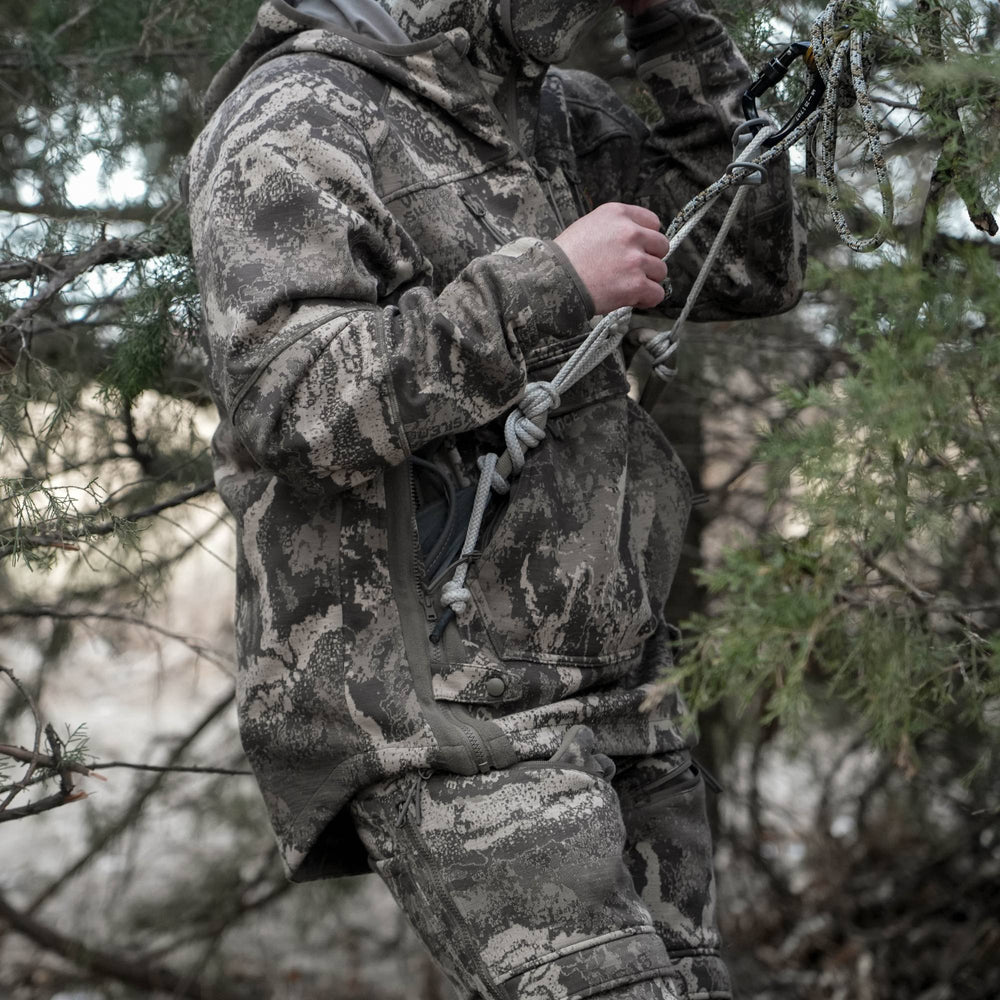
The Silence Layer system takes old-school wool and integrates it with purpose-driven design: mapped insulation, microfleece backing, and quiet closures that stay dead still when you’re drawing back or standing up. You get the warmth and weather resistance of traditional wool, without the bulk or the old-school downsides.
This isn’t lifestyle camo. It’s lethal-layered gear built for private land bucks that demand your best. You stay dry. You stay warm. And most importantly—you stay quiet.
Tip: Dress with the Sit in Mind
Layer based on exertion and stillness. Don’t overdress on the walk in—sweat is the enemy of silence. Let your Code of Silence outerwear trap heat once you cool down in the stand. Dry equals quiet.

Real-World Application: Still-Hunting a Cut Cornfield in January
Last season, I was walking a cut cornfield edge after a brutal cold snap in Iowa. Temps were in the teens. The ground was frozen, the air dead calm. Every step felt like breaking glass.
Except I wasn’t breaking anything. I was layered in Code of Silence top to bottom. I took a knee behind a terrace, watched a finger of timber, and caught antler tips moving slow through the grass.
At 42 yards, I came to full draw—no squeak, no swish, no crunch. That buck never knew I existed until the arrow hit. That’s the edge this gear gives you: not invisibility, but inaudibility. And in the late season, when every buck is wired tighter than a snare drum, that matters more than ever.
Tip: Practice Movement in Full Kit
Before season, gear up and run drills in your yard or garage. Draw your bow. Stand. Sit. Reach into your pocket. Do it all—and listen. Train your body to move in silence, and your gear to cooperate.
Tuning Out, Locking In: The Mental Edge of Silence
When your gear’s quiet, you stop worrying about what it’s doing—and start focusing on what you’re doing. That shift changes everything. Your breathing. Your awareness. Your confidence.
Hunting mature bucks isn’t about luck. It’s about systems. It’s about control. And silence is the kind of control most guys overlook until it’s too late.
When you know your gear won’t betray you, you’re more composed. You move deliberately. You glass longer. You let that buck close the distance without rushing the shot. That’s not just a physical advantage—it’s a mental one.

Final Thoughts: Silence as a Strategy
We talk a lot about wind, thermals, entry routes, and stand height—but we don’t talk enough about noise discipline. And yet, in the whitetail woods, it can be the final straw that breaks your shot opportunity.
Code of Silence was built for this. For late-season setups on pressured deer. For the moments when 15 yards feels like five. For hunters who obsess over every detail because they know how few chances you get.
Silence isn’t sexy. But it kills.