




Late Season Gear Dump: What Actually Works When the Temperature Drops

Late season is where gear gets exposed. Not on paper. Not in a catalog. In real conditions—sub-zero mornings, wind cutting through timber, and long sits on deer that have already been educated for months. This is the time of year when anything that doesn’t work gets stripped out of my system.
Code of Silence doesn’t build stand-around-and-freeze gear. Late season is exactly where their design philosophy shows up. Quiet fabrics. Wind-blocking construction. Insulation that works when you’re sitting still for hours, not just walking to the stand. This is a straightforward look at what stays in my pack, what’s gone for good, and why.

The Rule for Late Season Gear
Late season hunting is about efficiency. If a piece of gear doesn’t keep me warm, block wind, or stay dead quiet, it doesn’t come with me. Movement is the enemy this time of year. Noise is amplified. Mistakes are final.
Every layer and accessory has one job: buy time on stand. The longer you can sit comfortably without fidgeting, the more likely you are to capitalize when a late-season deer finally stands up in daylight.
A Layering System Built for Long Sits
Late season layering isn’t about piling on bulk. It’s about managing moisture, trapping heat, and staying flexible when you’re stationary for long stretches.
The system starts with a proper base layer. Lightweight merino or fast-drying synthetic layers are critical because sweat is unavoidable on the walk in. If moisture stays against your skin, you’ll pay for it once you stop moving.

Mid-layers need to insulate without restricting movement. Grid fleece tops or insulated hoodies work well here, holding warmth while still breathing enough to prevent overheating. This layer is doing most of the work once you’re settled in.
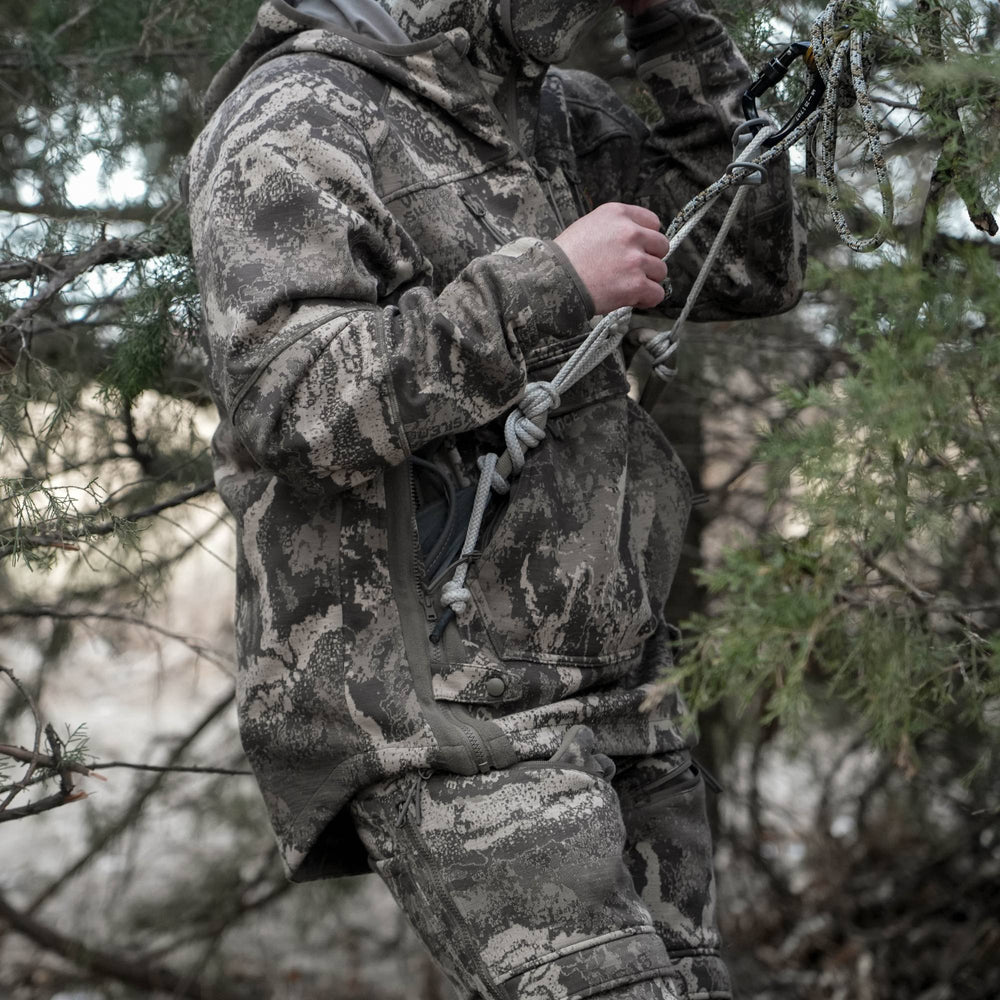
The outer layer is where late season success or failure shows up. Code of Silence outerwear is designed specifically for this window of the season—windproof, insulated, and quiet even when temperatures drop into the single digits. The fabrics stay soft instead of stiff, and the open camo patterns do a better job breaking up your outline once leaves are gone and the woods turn gray and brown.
What’s in My Late Season Pack
My pack gets leaner as the season goes on, but a few items never leave.
Extra gloves are mandatory. I carry one heavy insulated pair for long sits and a lighter dexterity pair for climbing and shooting. A neck gaiter and beanie are non-negotiable—blocking wind around your head and neck goes a long way toward conserving heat.
A hand warmer muff stays in the pack. It reduces unnecessary movement and keeps hands functional when temperatures dip into uncomfortable territory. On the coldest days, a compact thermos earns its spot. Internal warmth matters when you’re asking your body to sit still for hours.
My kill kit is minimal late season. Recoveries are colder, faster, and often involve frozen ground. Extra bulk doesn’t help here.
This setup stays the same whether I’m hunting private ground or pressured public land. Cold doesn’t care where you hunt.
Boots: Where Late Season Hunts Are Won or Lost
Cold feet end more late season hunts than missed shots. Once your feet go numb, your hunt is already over.
I run LaCrosse Alpha Burly boots during late season, sized slightly larger to allow proper circulation. They offer the insulation and durability needed for cold, wet conditions without locking your feet up. Dryshod and Muck boots also fit the bill here—what matters is insulation, waterproofing, and enough room for quality socks.

Merino wool socks are mandatory. Cotton has no place in late season hunting. On especially brutal days, adding a vapor barrier sock can make a noticeable difference. If your boots or socks fail, no jacket system in the world will save the sit. I like to wear a pair of socks walking in and then change into fresh socks before I climb if possible.
Small Adjustments That Make a Big Difference
Some of the most effective late season improvements don’t come from a product page.
Taping metal contact points on stands and climbing sticks reduces both noise and cold transfer. A simple foam seat pad weighs almost nothing and provides insulation from cold platforms or seats. Slowing everything down—every adjustment, every movement—is critical when deer are on edge and the woods are quiet.
The warmer and quieter you are, the longer you stay effective.
What’s Out of the System
Late season has no tolerance for weak links.
Heavy, noisy bibs that restrict movement are gone. Overstuffed packs filled with just-in-case items don’t make the cut. Any clothing that only works down to mild cold temperatures gets exposed early and replaced long before winter sets in.
Late season doesn’t lie. If gear failed earlier in the year, it won’t magically work now.
Final Take
Late season success isn’t about enduring misery. It’s about preparation. Quiet layers that hold heat. Windproof outerwear that lets you sit longer. Footwear that keeps you comfortable from dark to dark. Open camo patterns that disappear when the woods are bare.
Code of Silence gear is built for this exact stretch of the season—when patience matters, movement costs you, and one sound can end the hunt. If you’re still freezing or fidgeting, it’s not the deer’s fault.