




Cold Front Kill Zones: How to Hunt Food When It Matters Most

Late-season deer hunting can either break you or make your season. When the temps drop, the snow stacks up, and the rut's long gone, a cold front becomes your best shot at catching a mature buck on his feet during daylight. But you can’t just show up. If you're not dialed into the right food sources and you can’t sit tight when the mercury tanks, you're just burning time and spooking deer.
Why Cold Fronts Trigger Daylight Movement
A proper cold front—20-degree drop, stiff north wind, barometric pressure bump—doesn’t just make you shiver. It flips a switch in deer. After a warm spell or weather lull, deer move early to hit calories and prep for the next wave of cold. Especially late in the season when their bodies are in recovery mode post-rut.
That’s your cue. But it only works if you’re already dialed on food and have the gear to stay put when things get brutal.
Food Plot Positioning: It’s Not About Size, It’s About Timing
In December and January, a lush, low-pressure clover plot isn’t doing much. What matters now is food that’s high-energy and close to bedding. Think standing corn, late beans, brassicas, or hard-to-find acorns in oak draws. But just as important as what the deer are eating is where it’s located.
The best cold front setups put food where deer don’t have to expose themselves too early. Finger ridges, brushy ditches, south-facing slopes with edge cover—these are the places bucks feel safe stepping into when the wind’s cutting sideways. If your food plot’s out in the wide open, you better have perfect entry/exit or a box blind setup.

Better yet? A hidden plot a hundred yards inside the timber that catches deer staging before they commit to the bigger ag.
These staging plots don’t need to be big. A quarter-acre of brassicas tucked behind a hinge-cut line or a no-till grain strip in a secluded hollow can outproduce a 5-acre ag field when the pressure’s high and the temps are low. Bucks aren’t traveling far—they’re slipping out just far enough to feed and stay alive.
Wind direction is also critical. Position plots so deer can enter them with the wind in their nose but the wind still works in your favor for a side access or quartering approach. If they can smell the food, feel safe, and reach it within 50 to 100 yards of their bed, that’s a kill zone during a cold front.
Also consider the thermal activity of your setup. Cold air sinks. If your plot sits in a frost pocket or valley bottom, your scent is pooling there unless you’ve got a good thermal rise. That’s why south-facing benches and thermal hubs just off the spine of a ridge are gold—food can be planted there, and bucks will scent-check it from elevation without exposing themselves.
It all comes down to layering food close to cover and making sure your hunt plan keeps pressure off the plot. Once a mature buck knows he can hit calories without being seen or smelled, he’ll pattern that food like clockwork.
Natural Browse: The Overlooked Kill Zone
Too many hunters ignore what’s already feeding deer in the timber. If your habitat work has created young regen, edge feathering, or hinge cuts, chances are you’ve got browse working 24/7. Cold fronts drive deer to this stuff just as much as food plots. Especially in pressured areas where food plots get glassed and bumped constantly.
Walk your property after a frost. Look for fresh browsing on greenbrier, blackberry cane, honeysuckle, or saplings. Bucks love to stay just inside cover where they can feed and feel safe. That’s where you should be.

And it pays to know your region:
-
Midwest: Greenbrier, dogwood, wild raspberry canes, and the tips of regenerating oaks are staples. In CRP edges and timber cuts, look for forbs and young growth hammered by cold-hungry deer.
-
Southeast: Honeysuckle is king, but also keep tabs on beautyberry, wax myrtle, and privet. Southern deer browse a wider range, especially after frosts sweeten the woody stems.
-
Northeast: Red maple twigs, striped maple, and mountain ash serve as important winter browse. In mountainous terrain, deer dig into regenerating clearcuts for stemmy food and thermal cover.
-
Plains & Prairie: Wild sunflower stalks, willow, and plum thickets offer cover and browse. Check creek bottoms and fence lines for fresh sign.
-
Texas & Southwest: Mesquite beans, prickly pear pads (burned or natural), and live oak browse fill the gap when mast is gone. Look for sign near brush country cuts or water access.
Understanding regional browse isn’t just a habitat nerd detail—it’s a blueprint for where to ambush late-season deer that don’t want to risk daylight on a wide-open plot.
Stay Longer, Hunt Smarter: Gear for the Sit
All of this is worthless if you can’t stay in the stand. When it’s single digits and you’ve got six hours to go, you’ll need more than willpower. You need wool that breathes and insulates without turning you into a swamp. You need gear that doesn’t rustle when you shift or pull up your binos.
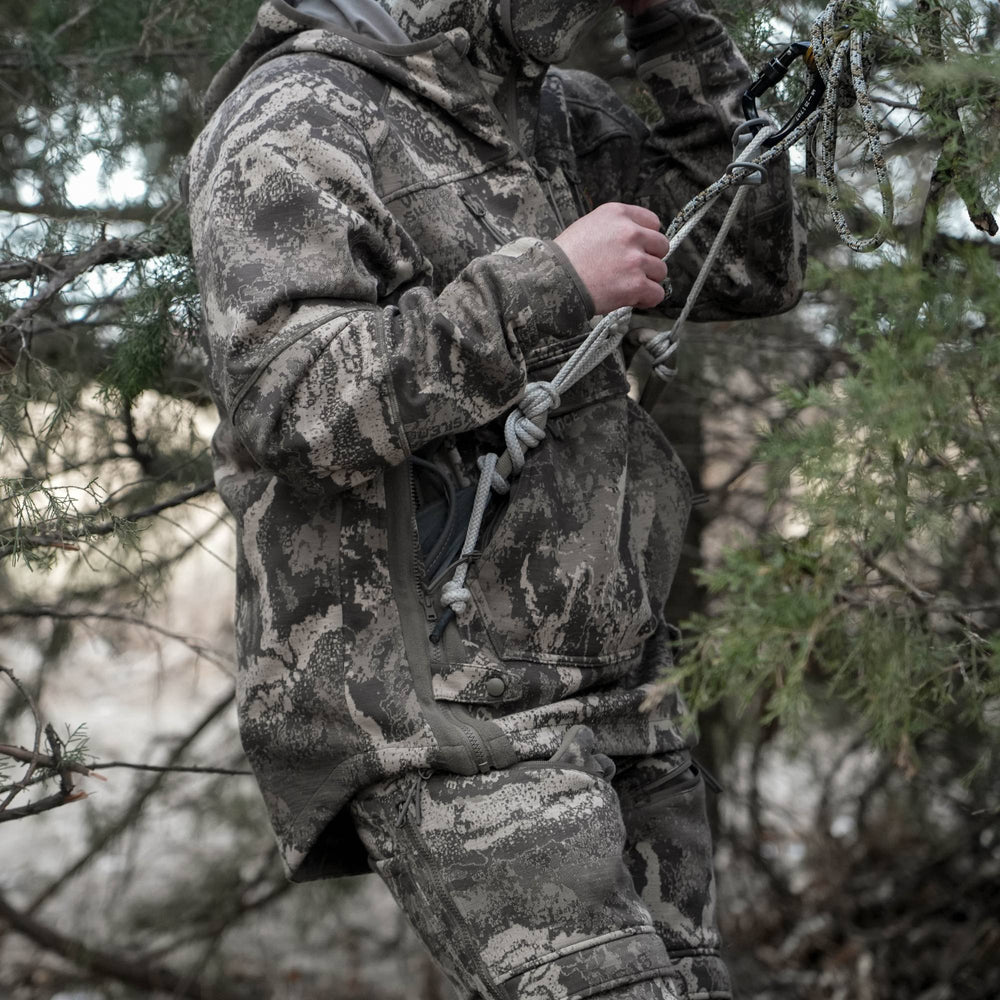
Code of Silence was built for this. Natural disruption patterns to blend in when the woods go gray. Silent fabric that lets you draw in subzero temps. Layered warmth that doesn’t bulk you out of your saddle or stand.
If you want to kill a buck in a late-season cold front, you need to think like one. Move only when it’s worth it. Eat when calories are critical. Stay put when the wind’s sharp. The deer are doing it. You should too.